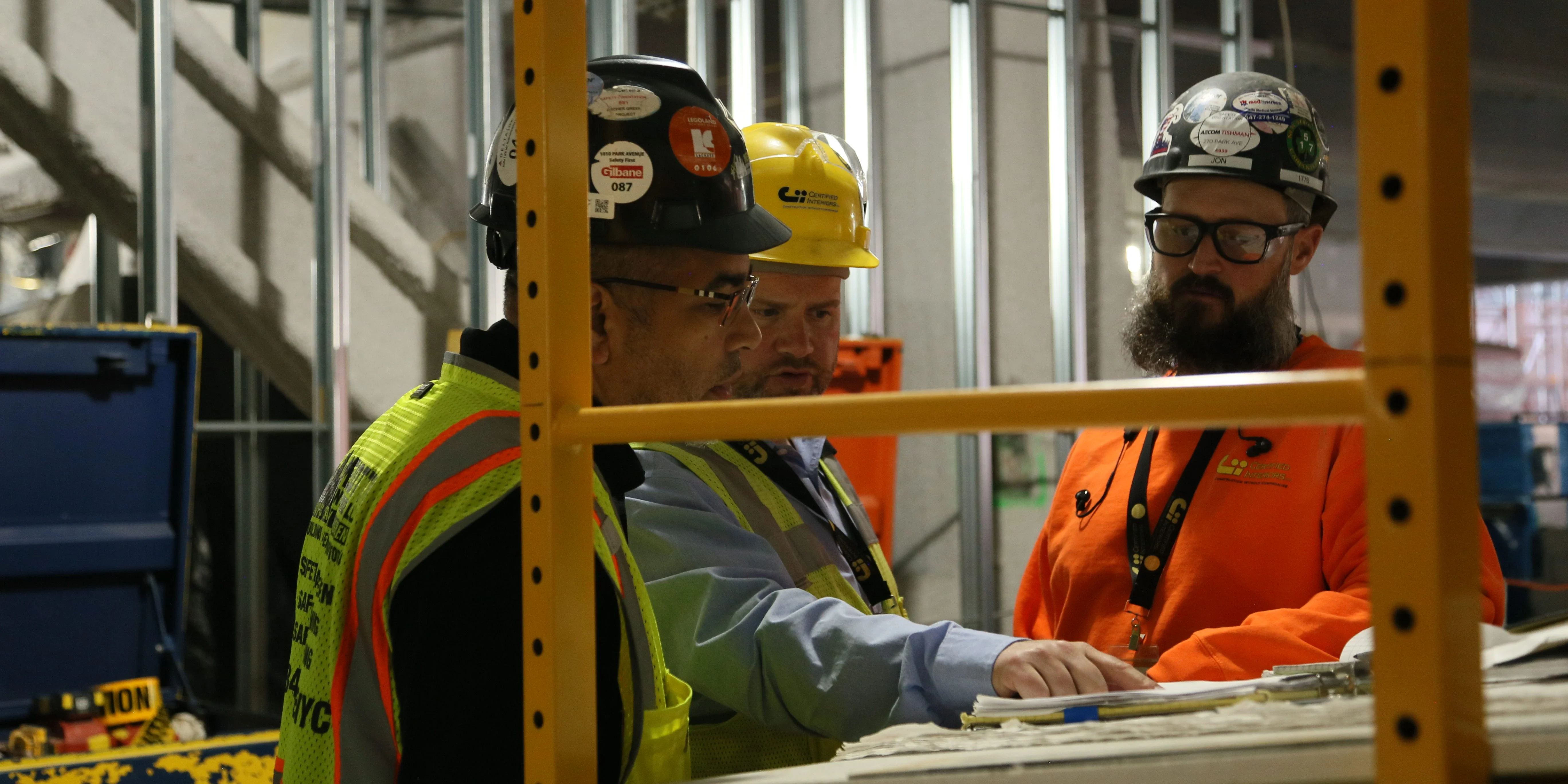
Walk onto any active job site in New York City, and the risks are everywhere.
Heavy machinery. Elevated work areas. Confined spaces. Hazards that can change a project or a life in seconds.
That’s where a Health and Safety Plan (HASP) comes in. It’s a site-specific safety strategy that helps prevent injuries and keeps your project on track.
Let’s break down what a HASP is, what goes inside one, and why it matters on every level of your project.
Health and Safety Plan Explained
A Health and Safety Plan is a written document that outlines safety procedures and protocols for a specific job site. Think of it like a rulebook for your entire crew.
It identifies all potential hazards on-site and explains how your team should manage them. This includes what personal protective equipment (PPE) is needed, how workers are trained, how emergencies are handled, and how to manage chemical spills or heat exhaustion.
While the Occupational Safety and Health Administration (OSHA) doesn’t require a HASP for every job, many state and federal regulations do. In New York City, projects involving hazardous materials, elevated work, or large-scale excavation often require a full written plan.
A clear, job-specific HASP gives your supervisors and crews direction. It helps them spot risks, follow procedures, and respond to problems before they get worse.
Where Does a HASP Apply?
A Health and Safety Plan applies to any job site where crews face physical, chemical, or environmental risks. This includes:
- Demolition sites
- Excavation work
- High-rise construction
- Infrastructure and utility upgrades
- Projects involving asbestos, lead, or hazardous materials
- Emergency cleanups under the Hazardous Waste Operations and Emergency Response standard (HAZWOPER)
If your site involves a crane, trenching, scaffolding, confined spaces, or chemicals, a HASP should be in place before work begins.
Even if your job isn’t federally mandated to have one, it’s still a smart move. A written plan helps avoid confusion, improves worker safety, and limits liability.
Who Writes the HASP?
Every site is different. Templates and shortcuts won’t cover the realities on the ground. A proper plan reflects where crews are working, what equipment is being used, how the weather could affect safety, and where potential hazards exist.
At Menotti Enterprise, we visit the site, meet with supervisors, and ask the right questions. Then we create a plan that fits the project.
If your next project needs a real plan built from real conditions, contact Menotti Enterprise today. We’ll help you prepare before the first day on site.
What Goes Into a HASP?
An effective HASP doesn’t just name the hazards. It provides clear steps for how to manage them. OSHA and the Environmental Protection Agency (EPA) guidance recommend several sections.
Here’s what they look like:
- Organizational structure: Names and contact info for site safety roles
- Job hazard analysis: Identifies what jobs are being done and where hazards may occur
- Site control: Work zones, access points, boundaries, and signage
- Training records: Who has been trained on what, and when
- Medical surveillance: When workers need physicals or monitoring
- PPE protocols: Hard hats, vests, respirators, and more
- Exposure monitoring: Air, noise, heat, and contaminant sampling plans
- Spill response: Steps for handling chemical or fuel leaks
- Decontamination procedures: Washing tools and gear after exposure
- Emergency response: Evacuation maps, fire protocols, first aid points
- SOPs: Standard operating procedures for risky tasks
- Confined space entry procedures: Permits and oversight for tight spaces
Plans are updated as the site evolves. That means a good HASP isn’t just written at the start. It’s reviewed often and adjusted as work shifts from phase to phase.
Common Hazards Covered in a HASP
To make this more real, here are examples of actual site hazards addressed in a HASP:
- Working at heights near edges without proper fall arrest systems
- Electrical work in damp environments without GFCI protection
- Trenching deeper than five feet without shoring or sloping
- Handling diesel fuel or solvents without proper gloves or ventilation
- Excessive heat exposure on rooftops in summer
- Inadequate lighting or housekeeping leading to slips or falls
By listing these hazards clearly, along with who’s responsible for preventing them, HASPs create accountability and structure.
Does OSHA Require a HASP?
OSHA doesn’t require a written HASP for every site. But it does require that hazards be identified and workers trained. A HASP is often the most efficient way to meet those requirements.
For cleanup operations involving hazardous waste, such as under HAZWOPER 1926.65, a written HASP is required. It must be job-specific and cover all safety controls.
In practice, most construction managers and general contractors rely on a HASP to prove that workers were informed and prepared. In court or during an inspection, it’s one of the first documents asked for.
How To Put Your Health and Safety Plan Into Action
Writing the safety plan is step one. The real work begins when it’s used on the job site.
Here’s how to make that happen:
1. Hold Regular Safety Meetings
Set a routine for toolbox talks and quick briefings before shifts. Keep the focus on upcoming tasks, site changes, and any risks that could affect workers that day.
2. Walk the Site Often
Inspect the work area daily or weekly. Check for new equipment, structural changes, or job phases that introduce new hazards. Match what’s happening in the field to what’s written in the plan.
3. Update the Plan When Conditions Change
If the project scope shifts, contractors rotate in, or weather creates new problems, revise the plan. Adjust safety procedures, equipment needs, and assigned responsibilities to reflect what’s happening on-site.
4. Keep Records
Document meetings, walkthroughs, updates, and training sessions. Written records help track compliance and show that safety measures are active, not theoretical.
5. Train the Crew on What Matters
Make sure supervisors, subcontractors, and workers know what’s expected. Review the plan during onboarding, then revisit it as tasks or conditions shift.
6. Involve the Whole Team
Safety works when it’s part of daily operations. Invite input from field crews, encourage questions, and address concerns as they come up.
7. Bring in On-Site Safety Support
Menotti Enterprise provides experienced safety professionals who help carry out the plan on location. We lead meetings, monitor compliance, and help reinforce safe habits while the work is underway.
Protect Your Project With a Site-Specific Safety Plan
So, what is a health and safety plan (HASP)?
In a nutshell, a HASP protects your crew, your schedule, and your reputation. It brings structure to the workday, keeps risks in check, and helps your team stay safe.
If your project involves machinery, elevated work, hazardous materials, or tight timelines, a written plan gives you the control to manage risk before it spreads.
Menotti Enterprise builds clear, site-specific HASPs that match the real conditions of your job.
Call us today to get your next plan started before the first shift begins.